DNA Sequence
GTGCACCTGACTCCTGAG
DNA Output
Val His Leu Thr Pro Glu
Where it is produced?
The beta subunit of hemoglobin is produced in red blood cell precursors in the bone marrow. It is encoded by the HBB gene, located on the 11th chromosome. During red blood cell development, this gene is expressed as a beta-globin protein, which later combines with other globin subunits to form functional hemoglobin.
What's its main role?
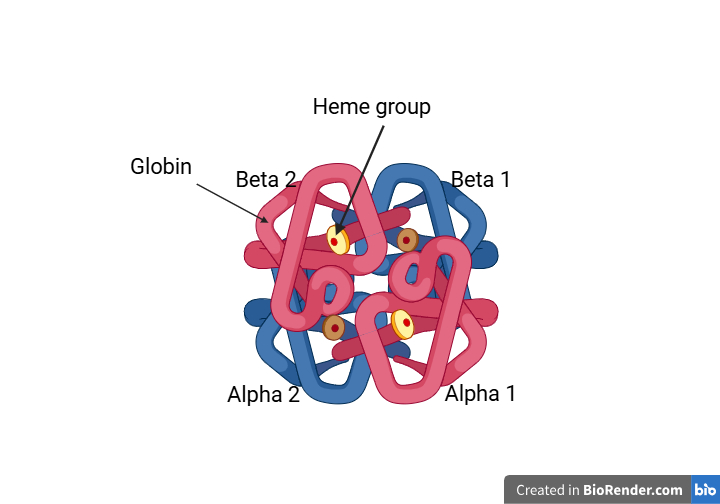
As mentioned, beta subunit is one of the building blocks of hemoglobin, a protein responsible for transporting oxygen in the blood. The most common form of hemoglobin in adults is hemoglobin A. It’s mainly composed of two alpha globin subunits and two beta globin subunits. Its main role is to help bind oxygen in the lungs, transport oxygen, and carbon dioxide throughout the body.
General mechanism of action:
Each beta subunit contains an iron cation (positively charged atom of iron - Fe2+), as a part of a heme group, allowing oxygen binding. So oxygen binds to the iron atom in the heme group. When one subunit binds oxygen, the structure of hemoglobin changes slightly, allowing other subunits to bind oxygen. Then, in the tissues with low O2 concentration, hemoglobin changes its shape again, releasing oxygen.
Functions:
- Oxygen transport
- CO2 transport
- Blood pH maintenance
- Regulation of oxygen affinity
Structure:
The beta subunit consists of approximately 146 amino acids. Its compact structure is primarily made of alpha helices* (explain?) with a heme-binding pocket, where the iron-containing group sits. Four globin chains assemble to form a hemoglobin molecule from two alpha chains and two beta chains. This specific arrangement allows hemoglobin to bind up to four oxygen molecules at once.
Related diseases:
- Sickle cell disease
- Beta thalassemia
A mutation in the HBB gene results in an abnormal beta-globin protein called Hemoglobin S. Due to that change, under low oxygen conditions, that type of hemoglobin sticks together, leading to rigid and sickle-shaped red blood cells. That leads to the pain episodes, chronic anemia, organ damage, stroke risk, and increased infection risk.
Mutations in the HBB gene reduce or stop the production of beta-globin chains, preventing hemoglobin from folding properly. That way, red blood cells become fragile and can’t properly carry out their function. That leads to anemia, fatigue, delayed growth in children, bone deformities (due to increased bone marrow activity), and sometimes requires regular blood transfusions.
Why matters?
Genetic disorders affecting the beta subunit of hemoglobin are one of the most common inherited blood disorders worldwide. Early detection, genetic screening and proper medical care can help improve the quality of life for affected people. Personal connection (Ms Siemens said we really need to add it everywhere): From the perspective of our project member, it’s important to mention that while we are talking about affected people with a distant perspective, everyone could have been affected by that. As a mother of one of our team memebers used to work as a pediatric onkologist-gematologist in a charity organisation (they were working mostly with cancer, but Mrs. Ostrovskaya was also working with genetic disorders, as there were cases identified), we know personally how many people are affected by these diseases, and how difficult it can be to help, with a lack of good diagnostic methods. Basic education of people and sometimes even doctors in regions could help identify these kinds of “rare” diseases and therefore target them.